
Can Chiropractic Adjustments Help Kids Who Are Addicted to Screens and Staying Up Too Late?

Chiropractic doesn’t cure screen addiction—but it helps calm an overstimulated nervous system. When kids can’t unplug or sleep, it’s usually not a willpower issue—it’s a regulation issue.
What Screens Do to a Child’s Nervous System
Screens aren’t neutral—especially for developing nervous systems.
Excessive screen use (especially at night):
Keeps the nervous system in a sympathetic (fight-or-flight) state
Suppresses melatonin and disrupts circadian rhythm
Trains the brain to crave constant stimulation
Reduces the body’s ability to transition into rest
Creates physical tension in the neck, spine, and shoulders (“tech posture”)
So when a child can’t put the device down or can’t fall asleep without it, that’s not defiance—it’s a nervous system that doesn’t know how to power down.
Telling a dysregulated system to “just stop” rarely works.
Where Chiropractic Adjustments Come In
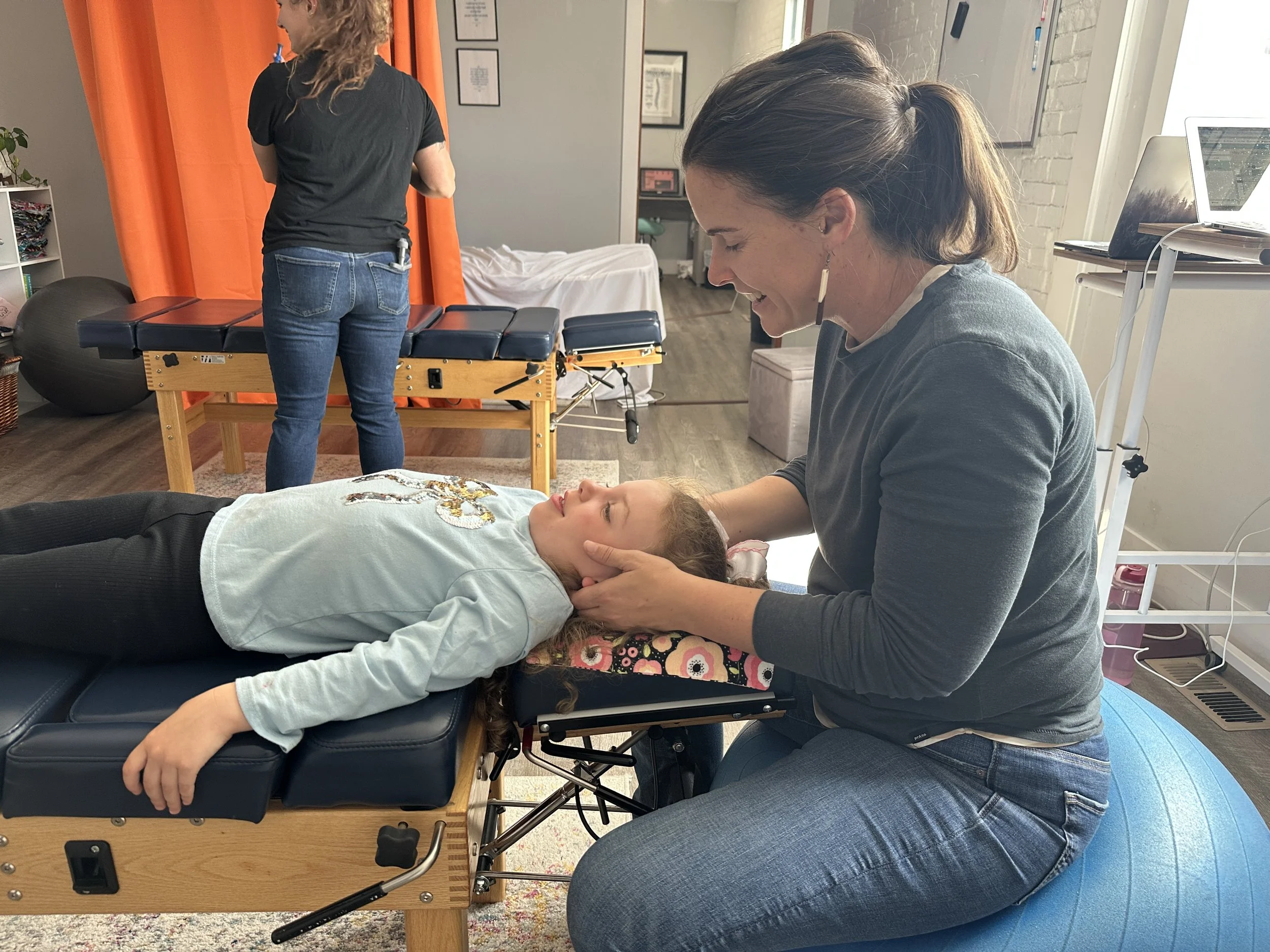
A pediatric chiropractic adjustment supports the parasympathetic nervous system—the part responsible for rest, digestion, sleep, and emotional regulation.
When we reduce tension and restriction in the spine:
The nervous system gets clearer signals of safety
The body becomes more capable of shifting out of “alert mode”
Sleep onset becomes easier
Kids feel calmer without needing constant stimulation
This doesn’t replace boundaries around screens.
It makes boundaries possible.
Why Parents Notice Changes After Adjustments
Parents often tell me things like:
“Bedtime isn’t a battle anymore.”
“They don’t NEED the tablet to fall asleep.”
“They’re calmer when we take screens away.”
“Transitions are easier.”
That’s not because chiropractic removes temptation.
It’s because the child’s nervous system is no longer relying on screens to self-regulate.
Think of It This Way
Screens become addictive when they’re doing a job the nervous system can’t do on its own.
If a child’s body can’t settle, screens become the coping tool.
Chiropractic helps restore the body’s internal off switch—so external stimulation isn’t the only option.
What Chiropractic Is (and Isn’t) Doing Here
Chiropractic helps:
Improve nervous system adaptability
Reduce physical and neurological tension
Support sleep-wake cycles
Increase emotional regulation capacity
Chiropractic does NOT:
Replace parenting boundaries
Eliminate screen exposure consequences
Act as a quick fix
It’s a foundation, not a shortcut.
For Missoula Parents Navigating Screen Overload
Between long winters, busy schedules, school demands, and limited daylight, screens can easily take over family rhythms here in Missoula.
The goal isn’t perfection.
It’s resilience.
When a child’s nervous system is supported, they don’t need as much external input to feel okay.
A Regulated Nervous System Changes the Pattern
If screens have become the only way your child can settle…
If bedtime feels like a negotiation every night…
If your household runs on stimulation instead of connection…
That’s not a failure of discipline or structure.
It’s a nervous system asking for support.
At Primal Practice Chiropractic, I work with Missoula families who want more than quick fixes. We focus on restoring nervous system regulation so kids can rest, focus, and self-regulate—without relying on constant external input.
Because when the nervous system feels safe, everything else becomes easier: sleep, transitions, boundaries, and connection.
👉 If you’re ready to support your child’s nervous system in a way that actually aligns with real life, I invite you to book a visit at Primal Practice and start building regulation from the inside out.
🖤,
Dr. Liz
